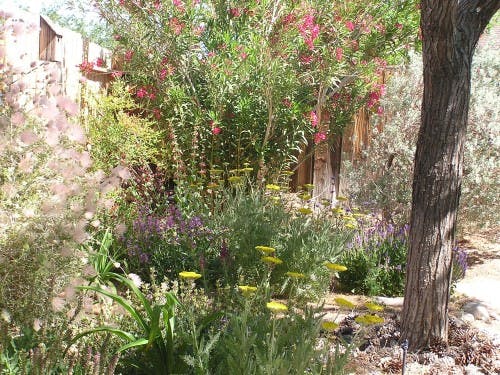
Xeriscape is a water-efficient landscape plan designed to help conserve
water. A well-designed landscape requires less maintenance, less mowing,
once-a-year mulching, and selection of plants which are adapted to the area
and not water sensitive.
Xeriscaping is a method using 7 basic landscape principles. Working
with these principles, you'll conserve water reduce maintenance time drastically.
One can achieve a beautiful green landscape that does not have to be all
cactus and rock gardens.
Garden Design - As with any landscape venture, you need to begin
with a basic design. Various factors may influence your decision to complete
the entire plan or to work in stages until you finish the job. A good design
will incorporate your family needs. How much time do you want to spend on
maintenance and how do you use your yard? Providing shade near the house,
ground covers, shrubs and turf will also serve to cool your house. Group
plants with similar water needs together. Keep in mind the mature size of
the plants you choose for your landscape.
Soil Improvement - Soil preparation is as important as selecting
plants. To help your shrubs and flowers add 4 inches of organic material
to the soil. This organic matter will increase the soil's ability to absorb
and store water for plant use. Your plants will be healthier, and watering
can be kept to a minimum.
Watering Techniques - Drip irrigation is the most effective system
for your watering needs. Easily added to an existing system, it makes watering
as convenient as turning on the faucet. You can also use drip systems for
all landscaped area and containers. These low-volume drip systems put the
water directly into the root zone, reducing evaporation and runoff.
Remember to water early in the morning or in the evening to lessen water
loss through evaporation. During the heat of the day, water loss is higher
than cooler hours.
Plant Selection - Select proven plants for our area. Young trees
and shrubs will require water more often; but after they're established,
water thoroughly on an infrequent basis. This will encourage them to grow
deep roots and be tolerant of hot, dry conditions.
Grass Selections - Grass selection and lawn care are major factors
in conserving water. Bermuda grass and Buffalo grass are recognized as good
drought-tolerant grasses. Most lawns receive twice as much water as they
actually require. Wait until the grass starts to turn dull green or until
footprints leave lasting impressions in the grass to determine when to water
again..
Mulching - A layer of mulch material covering the soil surface around plants
will conserve moisture, help prevent soil compaction, conserve water and
protect plant roots from both heat and cold temperatures. Rocks are good
inorganic mulch materials.
Care and Maintenance - Proper care and maintenance will preserve
the Xeriscape beauty. Weed control, proper mowing, proper fertilization,
pest control and an efficient irrigation system will all help conserve water.